
People usually want a number when they ask how long it will take to train their dog. Is it two weeks? Six weeks? Three months? Never?
The problem is that dog training does not work like changing the oil in a car. There is no universal finish date where a dog suddenly understands every rule, ignores every distraction, and never makes another questionable decision around an unattended sandwich. Families researching dog training in Kansas City are usually better served by thinking in stages. Some skills can improve quickly and reliable habits require repetition.
More difficult behavior can take longer because the dog is learning how to respond in real situations, not just in a quiet room with treats nearby.
Basic skills can start quickly
Dogs can begin learning simple patterns almost immediately. Sit. Come. Wait. Walking with less pulling. Settling in one place. Paying attention when their name is called. A dog may understand the idea after a few short sessions. That does not mean the behavior is reliable yet.
The living room is easy. The front yard is harder. A park with squirrels, kids, bicycles, and another dog fifty feet away is harder again. That is one reason dog training in Kansas City should be measured by progress in different environments, not by how fast a dog performs one skill in the easiest possible setting.
Repetition is where the real work happens
Most dogs do not need marathon training sessions. Short, consistent practice tends to be much more realistic for families. Five or ten focused minutes can be useful when the same expectations are reinforced during normal daily life.
Ask for a sit before opening the door. Practice waiting before the food bowl goes down. Reward calm behavior when guests arrive instead of only reacting after the dog is already jumping. A search for the best dog trainer in Kansas City may help families find professional guidance, but it can be advantageous if the dog still lives with the family the majority of the time. After all, consistency at home is what turns lessons into habits.
Puppies are learning everything at once
A puppy is not only learning commands. The puppy is learning where to sleep, where to go to the bathroom, what can be chewed, how hard is too hard during play, what a leash means, and why the vacuum apparently attacks the living room twice a week. That is a lot to absorb.
Expecting perfect behavior immediately creates frustration for everybody. Puppy training tends to work better when families focus on a few priorities, build a routine, and add complexity as the puppy becomes more capable.
Adult dogs can absolutely learn new habits
The old saying about old dogs not being able to learn new tricks is not exactly helpful or accurate. Adult dogs learn all the time. They may arrive with habits that have been practiced for years, which can make some changes slower, but age alone does not shut down learning. In fact, an adult dog may have better focus than a young puppy bouncing between every sound in the room.
Professional dog training in Kansas City can help families break a larger behavior goal into smaller steps instead of trying to fix everything during one exhausting weekend.
Training has to survive distractions
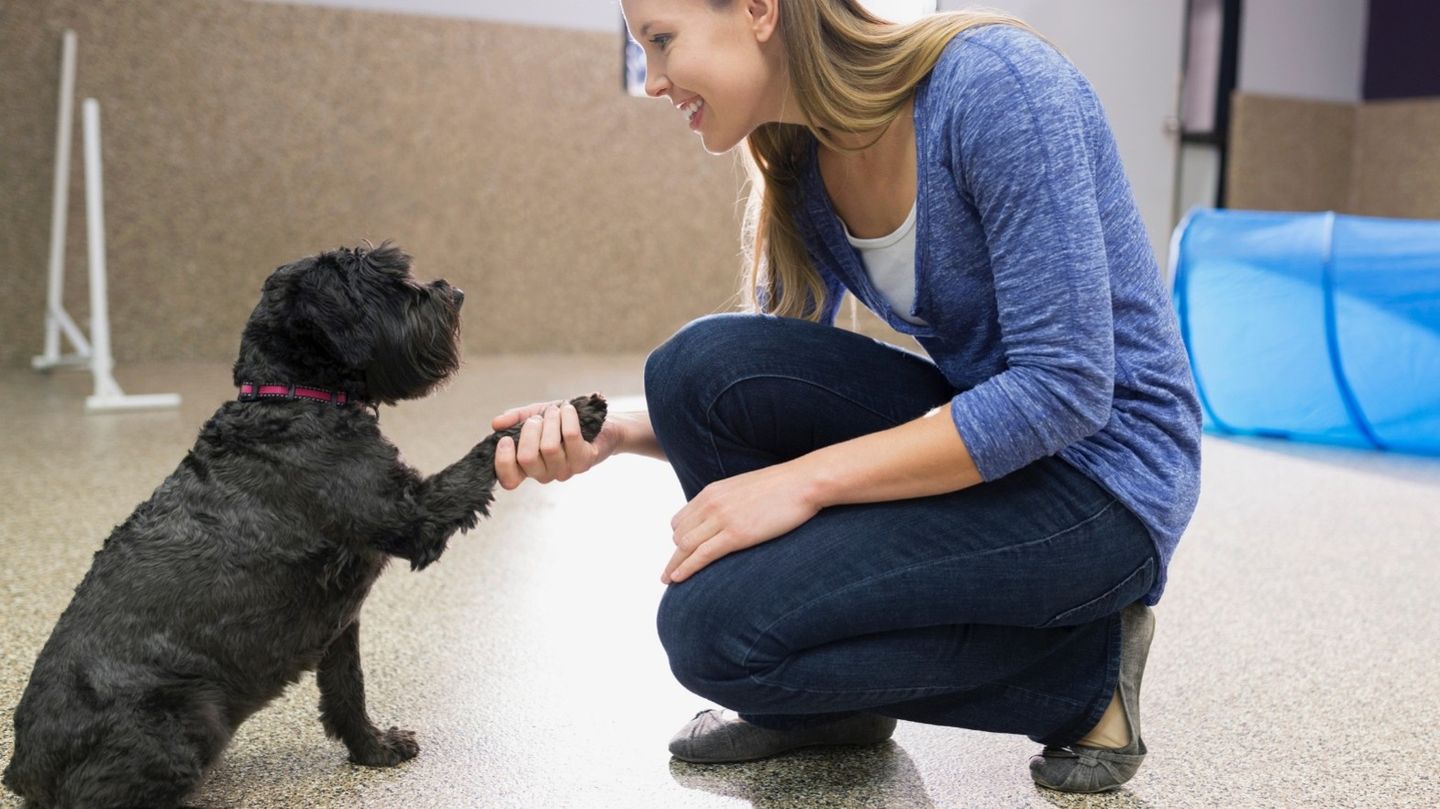
A dog that always obeys every time they are in the kitchen is not necessarily ready to obey all commands while at the park. That is normal. Reliable behavior is built by gradually practicing around more distractions while keeping expectations realistic. Jumping from easy practice straight into the hardest possible situation usually tells you more about the difficulty of the environment than the dog's ability to learn.
Dogs that spend time in doggie daycare in Kansas City are exposed to a different social environment than dogs that stay home most days. Families should think about the situations their own dog regularly encounters when deciding which skills deserve the most practice.
Boarding can expose weak spots in a routine
Sometimes families notice training gaps when they prepare for travel. Can the dog settle away from home? Is handling comfortable? Does the dog respond to basic cues from people other than one family member?
Dog boarding in Kansas City serves a different purpose from training, but experiences away from home can remind owners why adaptable routines matter. A dog does not need to perform a perfect obedience routine before boarding. It simply helps when the dog has experience with calm handling and familiar cues.
Grooming is another form of cooperation
Training is not limited to sit and stay. A dog also learns whether handling is normal. Touching paws, brushing, standing calmly for a few seconds, and allowing ears to be checked are all useful life skills.
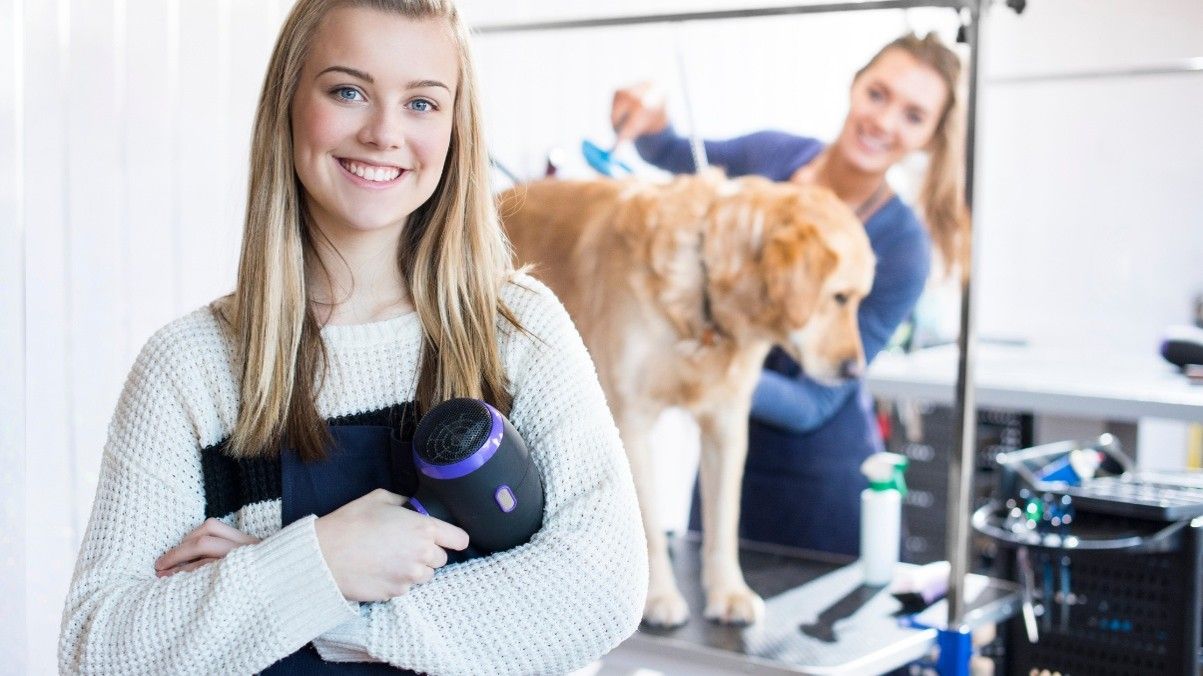
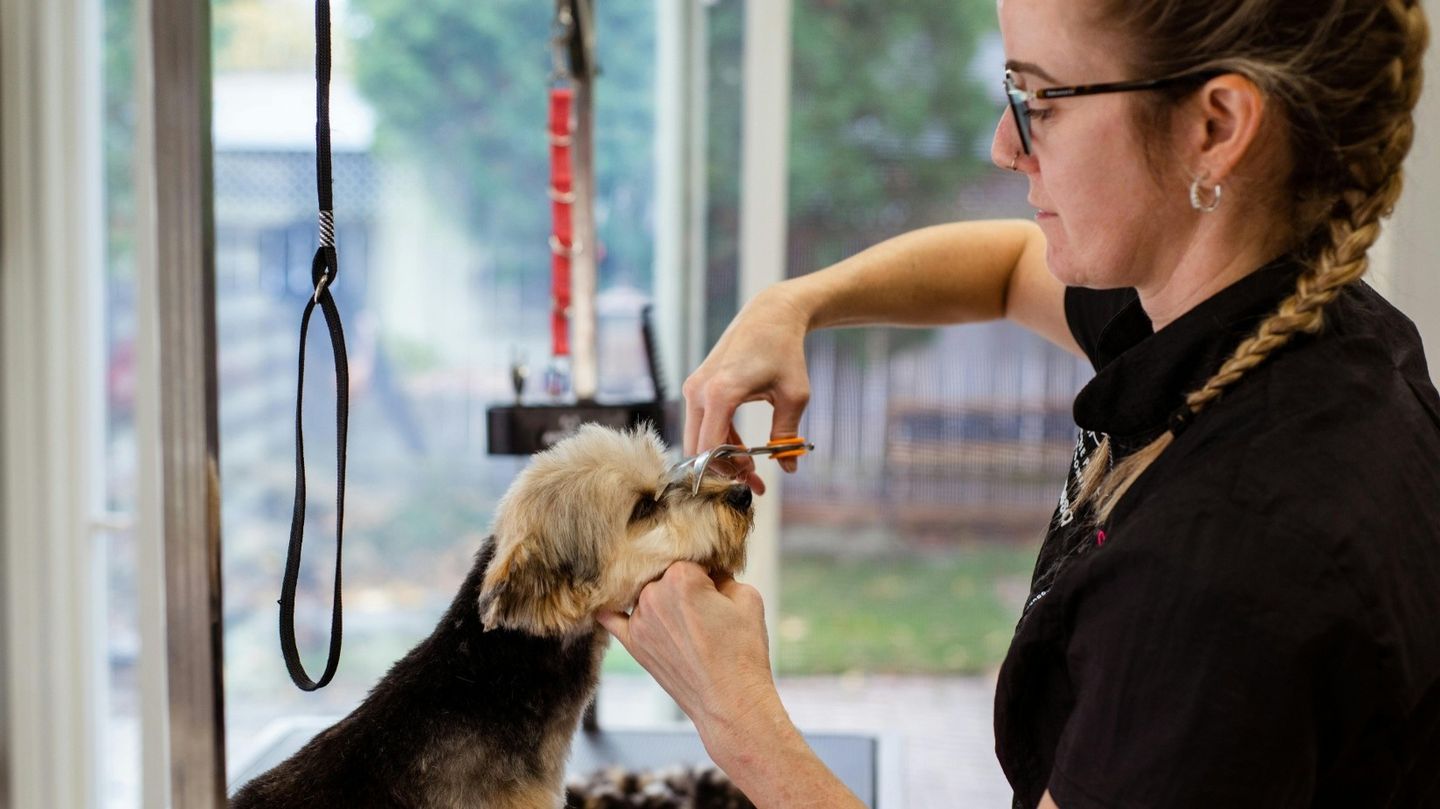
Pet grooming in Kansas City can be easier for everyone when a dog has practiced calm handling at home instead of only experiencing it during grooming appointments. The same is true for dog nail trimming in Kansas City. A dog that has slowly learned that paw handling is safe may have a much easier time than a dog whose feet are only touched when the clippers appear.
So when is training finished?
In a practical sense, it usually is not ever “completely” finished. Dogs keep learning from what works. If pulling gets them to the interesting smell faster, pulling gets practiced. If sitting makes the door open, sitting gets practiced. If barking at the window reliably brings a person over to look outside, the dog may decide that system works beautifully.
That is why dog training in Kansas City is less about reaching a graduation date and more about building habits the family can keep reinforcing. A puppy may need months to grow into reliable household behavior. An adult dog working on one specific issue may show meaningful improvement much sooner. A dog dealing with fear, reactivity, or another complicated behavior may need a slower plan.
Elkhound Ranch Kennels works with dogs in several parts of their routine, and training fits best when it feels connected to ordinary life rather than separate from it. The useful question is not, “How fast can we finish?” It is, “What does better look like this week?” With dog training in Kansas City, steady improvement is usually a much better target than an arbitrary deadline.

We help busy families. We help devoted pet parents. We help dogs and cats feel right at home.
We listen. We care. We deliver pet boarding, daycare, grooming, and training that keep tails wagging.
Want to discuss your pet's upcoming visit? Either call (816) 734-2526 or complete a form here.
Our staff is here to give your loyal companion a loving, safe, and entertaining environment.
Follow Elkhound Ranch Kennels on Facebook and Instagram for delightful pet pictures, updates, and special discounts.